What Ethnicity Am I? How to Find Out Your Ethnic Background
A practical guide to understanding your ethnic roots from AI face analysis to DNA testing, family history, and the science behind it all

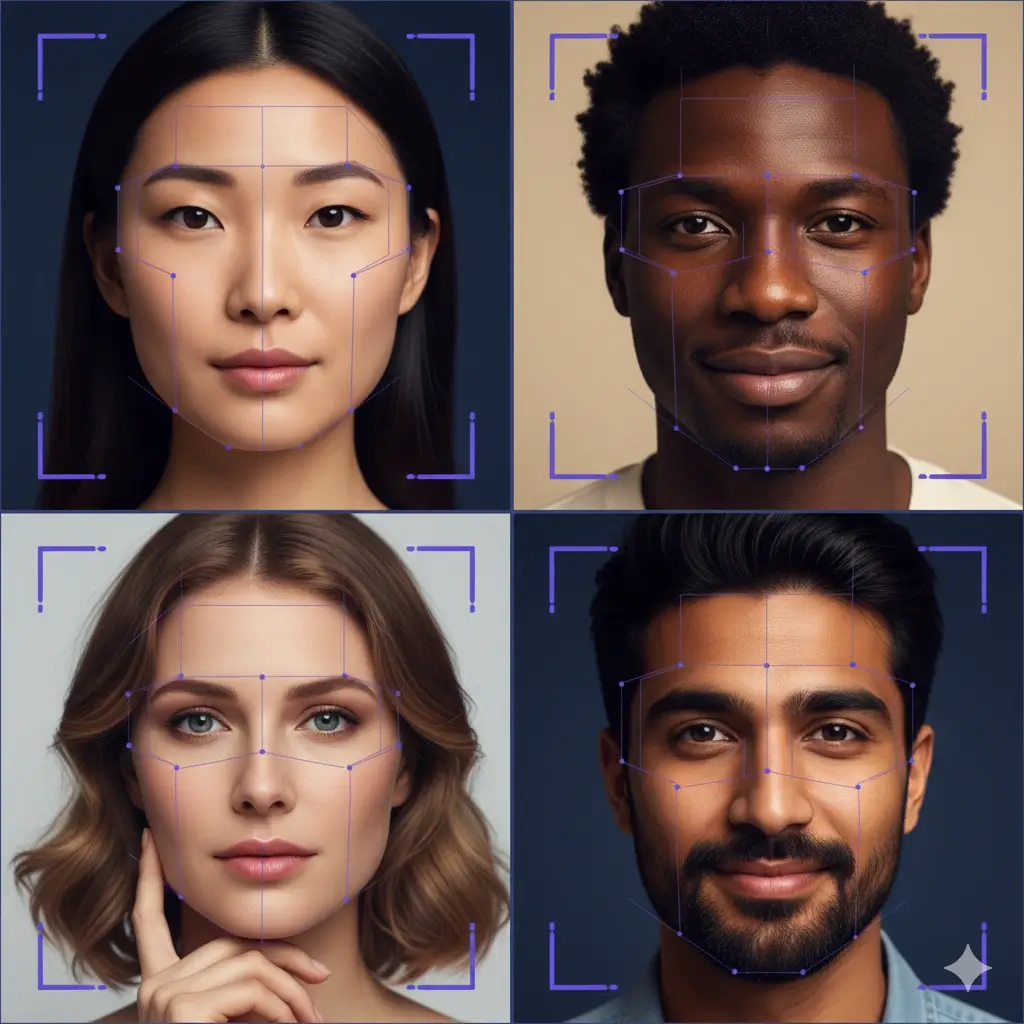
Table of Contents
- What Does 'Ethnicity' Actually Mean?
- Ethnicity vs. Race: What's the Difference?
- Why Do People Want to Know Their Ethnicity?
- 4 Ways to Find Out Your Ethnicity
- Which method should you use first?
- What Ethnicity Do I Look Like? How AI Reads Your Face
- Facial Features by Ethnicity: What the Science Says
- What Is My Ethnicity If I'm White?
- AI Ethnicity Test vs. DNA Test: Which Is Right for You?
- Frequently Asked Questions
I still remember the afternoon my grandmother pulled out a faded photograph from a shoebox a woman in traditional dress I didn't recognize, from a place I couldn't name. 'That's your great-great-grandmother,' she said. 'She came from somewhere in the Balkans.' That single moment sent me down a years-long rabbit hole of genealogy, DNA kits, and eventually, AI face analysis tools. If you've ever asked yourself 'what ethnicity am I?' you're in very good company. Millions of people search for this question every month, and the reasons are as varied as the answers.
What Does 'Ethnicity' Actually Mean?
Before we dive into how to find your ethnicity, it helps to understand what the word actually means because it's often used loosely in everyday conversation.
Ethnicity refers to a group of people who share a common cultural identity. This can include shared language, traditions, religion, history, and ancestry. It's a social and cultural concept, not a purely biological one. You can belong to an ethnic group because of where your family comes from, the language spoken at home, the food on your table, or the stories passed down through generations.
Importantly, ethnicity is partly self-defined. Many people identify with multiple ethnic groups simultaneously and that's completely valid. A person born in Brazil to a Japanese father and a Nigerian mother might identify with all three cultural heritages. According to Wikipedia's definition of ethnicity, an ethnic group is a group of people who identify with each other on the basis of perceived shared attributes — including language, culture, ancestry, traditions, and history.
Key Takeaway
Ethnicity is about cultural identity and shared heritage language, traditions, ancestry, and history. It's not the same as race, and it's not fixed. You can have more than one ethnicity, and your identification can evolve over time.
Ethnicity vs. Race: What's the Difference?
These two terms are often used interchangeably, but they mean different things and the distinction matters when you're trying to understand your own background.
Race is typically defined by physical characteristics primarily skin color, but also facial features and hair texture. It's a social construct that has been used historically to categorize people based on appearance. Race categories (like 'White,' 'Black,' 'Asian') are broad and don't capture the rich diversity within those groups.
Ethnicity goes deeper. It captures the cultural, linguistic, and ancestral threads that connect people. 'Hispanic' is an ethnicity, not a race a Hispanic person can be of any race. 'Jewish,' 'Yoruba,' 'Han Chinese,' 'Irish' these are all ethnicities that carry specific cultural meaning beyond physical appearance. For the country-membership side of the question, see our nationality vs ethnicity guide.
| Dimension | Ethnicity | Race |
|---|---|---|
| Definition | Cultural identity shared language, traditions, ancestry, history | Social category based on physical appearance |
| Basis | Culture, heritage, self-identification | Primarily skin color and physical traits |
| Examples | Irish, Yoruba, Han Chinese, Ashkenazi Jewish, Hispanic | White, Black, Asian, Indigenous |
| Flexibility | Can change or expand; self-defined | Often assigned by others based on appearance |
| Overlap | One ethnicity can span multiple races | One race can include many ethnicities |
| Scientific status | Recognized meaningful social/cultural category | Largely a social construct |
Why Do People Want to Know Their Ethnicity?
The question 'what ethnicity am I?' comes from many different places. Here are the most common motivations:
- Curiosity and identity — Many people simply want to understand who they are and where they come from. It's a fundamental human need to feel connected to something larger than ourselves.
- Family mysteries — Adoption, family secrets, immigration, and the passage of time can leave gaps in family history. People want to fill those gaps.
- Health awareness — Certain health conditions have higher prevalence in specific ethnic groups. Knowing your background can inform preventive healthcare decisions.
- Cultural connection — Some people want to reconnect with a heritage they feel disconnected from learning a language, exploring traditions, or visiting ancestral homelands.
- Pure fun — Sometimes it's just entertaining to see what an AI thinks you look like, or to compare results with friends and family.
4 Ways to Find Out Your Ethnicity
There's no single 'right' way to discover your ethnic background. The best approach depends on what you're looking for a quick answer, a deep genealogical dive, or something in between.
| Method | Accuracy | Cost | Time | Best For |
|---|---|---|---|---|
| AI Face Analysis | Visual features only | Free | Seconds | Quick curiosity, entertainment |
| DNA Testing | High (genetic) | $79$199 | 68 weeks | Deep ancestry research |
| Family History | Varies | FreeLow | WeeksMonths | Cultural identity, specific stories |
| Self-Identification | Personal truth | Free | Immediate | Cultural connection, community |
1 AI Face Analysis (Instant & Free)
Upload a photo and an AI analyzes your facial features to estimate which ethnic groups your appearance most closely aligns with. It's the fastest method results in seconds, completely free, no kit required.
Best for: Quick exploration, entertainment, curiosity about how others might perceive your ethnic appearance
Limitation: Reflects visible facial features, not actual DNA ancestry. Results can vary by photo quality and lighting.
2 DNA Testing (Most Accurate for Ancestry)
Services like AncestryDNA and 23andMe analyze your genetic material and compare it against reference populations from around the world. AncestryDNA covers over 1,500 regions globally. A 2025 survey found 68.2% of users recommend AncestryDNA for genealogy purposes.
Best for: Deep ancestry research, finding living relatives, health-related genetic insights
Limitation: Costs $79$199, requires a saliva kit, results take 68 weeks. Estimates can shift as reference databases are updated.
3 Family History Research
Talking to older relatives, reviewing immigration records, birth certificates, census data, and historical documents can reveal ethnic heritage that DNA tests might miss especially for recent cultural identity.
Best for: Understanding cultural identity, filling in specific family stories, connecting with living relatives
Limitation: Time-intensive, records may be incomplete or lost, especially for families affected by war or forced migration.
4 Cultural Self-Identification
Ultimately, ethnicity is partly self-defined. If you were raised in a particular cultural tradition, speak a heritage language, or feel a strong connection to a specific community that is a legitimate form of ethnic identity.
Best for: Personal identity, cultural connection, community belonging
Limitation: Doesn't provide information about biological ancestry or genetic heritage.
Which Path Should You Use First?
The question “what ethnicity am I?” can mean several different things. Match the method to the kind of answer you actually want.
| If you want to know... | Start with | Why |
|---|---|---|
| How your face may be perceived in one photo | Ethnicity Guesser by Photo | It gives a fast visual estimate and explains how image quality affects the output. |
| Whether a detector-style result changes with another upload | Ethnicity Detector | It focuses on visible cues, confidence signals, and photo conditions. |
| Where your inherited ancestry may come from | DNA testing plus family records | Genetic markers and documents answer ancestry questions better than face appearance. |
| How you personally identify culturally | Family history and lived community context | Ethnicity includes language, traditions, culture, and self-identification. |
Practical route
Use AI photo tools for a quick appearance estimate, then use records, relatives, culture, and DNA if the real goal is ancestry or identity.
What Ethnicity Do I Look Like? How AI Reads Your Face
When you upload a photo to an AI ethnicity analyzer, what's actually happening under the hood? The process is more sophisticated than most people realize.
Modern AI ethnicity tools use convolutional neural networks (CNNs) the same class of deep learning models used in facial recognition technology. These networks are trained on millions of labeled facial images from diverse populations around the world.
1. Face Detection
The AI locates your face in the image and identifies 128+ facial landmarks specific points on your eyes, nose, mouth, jawline, and cheekbones.
2. Feature Extraction
The algorithm measures distances, angles, and proportions between landmarks. It also analyzes skin undertones, eye shape characteristics (like epicanthic folds), nasal bridge height, and facial bone structure.
3. Pattern Matching
These extracted features are compared against demographic databases representing ethnic populations from around the world.
4. Probability Scoring
The AI outputs a probability distribution not a single definitive answer, but a ranked list of ethnic groups whose facial characteristics most closely match yours.
Important to Know
AI ethnicity analysis reflects apparent facial features, not your actual DNA ancestry. The same person can get different results with different photos lighting, angle, and expression all affect the output. Think of it as 'what ethnicity do I look like' rather than 'what ethnicity am I genetically.'
Facial landmarks analyzed
Average processing time
No cost, no registration
Facial Features by Ethnicity: What the Science Says
One of the most fascinating aspects of human diversity is how our faces carry the story of our ancestors' migrations, adaptations, and environments. Research published in PLOS ONE and the NIH has documented measurable differences in facial morphology across ethnic groups differences that evolved over thousands of years in response to climate, geography, and genetic drift.
Here's a science-backed overview of key facial characteristics associated with major ethnic groups. These are statistical tendencies, not universal rules there is enormous variation within every group.
Research Note
These are population-level tendencies based on peer-reviewed research. Individual variation within any ethnic group is vast. No single facial feature definitively identifies someone's ethnicity. Peer-reviewed data sourced from a systematic review and Bayesian meta-analysis published in PLOS ONE, covering photogrammetric studies of inter-ethnic facial variations.
| Ethnic Group | Common Facial Characteristics |
|---|---|
| East Asian |
|
| European / Caucasian |
|
| Sub-Saharan African |
|
| South Asian |
|
| Middle Eastern / North African |
|
| Indigenous / Native American |
|
What Is My Ethnicity If I'm White?
This is one of the most common questions I see and it's a great one, because 'white' is a racial category, not an ethnicity. Being white tells you about how society may perceive your skin color, but it says nothing about your cultural heritage or ancestral origins.
If you identify as white, your ethnic background could be any combination of dozens of European (and sometimes non-European) heritages:
- Irish, Scottish, Welsh, or English
- German, Austrian, or Swiss
- French, Belgian, or Dutch
- Italian, Spanish, or Portuguese
- Polish, Czech, Hungarian, or other Central/Eastern European
- Greek, Balkan, or Slavic
- Scandinavian (Swedish, Norwegian, Danish, Finnish)
- Ashkenazi or Sephardic Jewish
- Armenian, Georgian, or other Caucasian
- Mixed heritage combining several of the above
Many white Americans, Canadians, and Australians have mixed European ancestry that has blended over generations. A DNA test is the most reliable way to break down the specific regional origins. An AI face analysis can sometimes pick up on features more common in certain European subgroups but the differences within European populations are subtle, and results should be taken as exploratory rather than definitive.
The short answer: if you're white and want to know your specific ethnicity, a DNA test combined with family history research will give you the most meaningful answer.
AI Ethnicity Test vs. DNA Test: Which Is Right for You?
Both tools answer the question 'what ethnicity am I?' but they answer slightly different versions of it. Here's how to choose:
| Factor | AI Face Analysis | DNA Test (e.g., AncestryDNA) |
|---|---|---|
| Cost | Free | $79 $199 |
| Speed | Results in seconds | 6 8 weeks |
| What it measures | Apparent facial features | Actual genetic ancestry |
| Accuracy type | Visual / phenotypic | Genetic / ancestral |
| Best for | Quick exploration, fun | Deep ancestry, health insights |
| Privacy | Photo processed, not stored | DNA sample stored by company |
| Requires kit? | No just a photo | Yes saliva sample by mail |
| Mixed heritage | May reflect dominant visible features | Shows percentage breakdown of all ancestry |
Your Ethnicity Is a Story Worth Knowing
The question 'what ethnicity am I?' doesn't have a single, simple answer and that's actually beautiful. Ethnicity is layered: it's the genes you inherited, the culture you were raised in, the languages you speak, and the stories your family carries.
Modern tools like AI face analysis and DNA testing have made it easier than ever to start exploring that story. They're not perfect no technology can fully capture the complexity of human identity but they're genuinely useful starting points.
Whether you're driven by curiosity, a family mystery, or a desire to connect with your roots, I hope this guide gives you a clearer map for the journey. And if you want to start right now, our free AI ethnicity test takes less than 30 seconds.
Frequently Asked Questions
About the Author
Sophie Laurent
Sophie Laurent is a Paris-born lifestyle and science writer who has spent over a decade exploring the intersection of identity, culture, and technology. Her work has appeared in international magazines covering topics from genetic genealogy to the cultural meaning of beauty. She believes that understanding where we come from is one of the most human things we can do and that modern AI makes that journey more accessible than ever.
References & Sources
- Bugaighis, I. et al. (2015). Inter-Ethnic/Racial Facial Variations: A Systematic Review and Bayesian Meta-Analysis of Photogrammetric Studies. PLOS ONE. View Source
- Wikipedia: Ethnicity shared cultural attributes including language, customs, traditions, and ancestry. View Source
- Farkas, L.G. et al. NIH/PMC: Variations of Structural Components Intercultural Differences in Facial Morphology. View Source
- DNAWeekly (2025). Best Ethnicity Estimate: Survey of 1,100+ DNA test users. View Source
Last updated: Updated July 11, 2026